
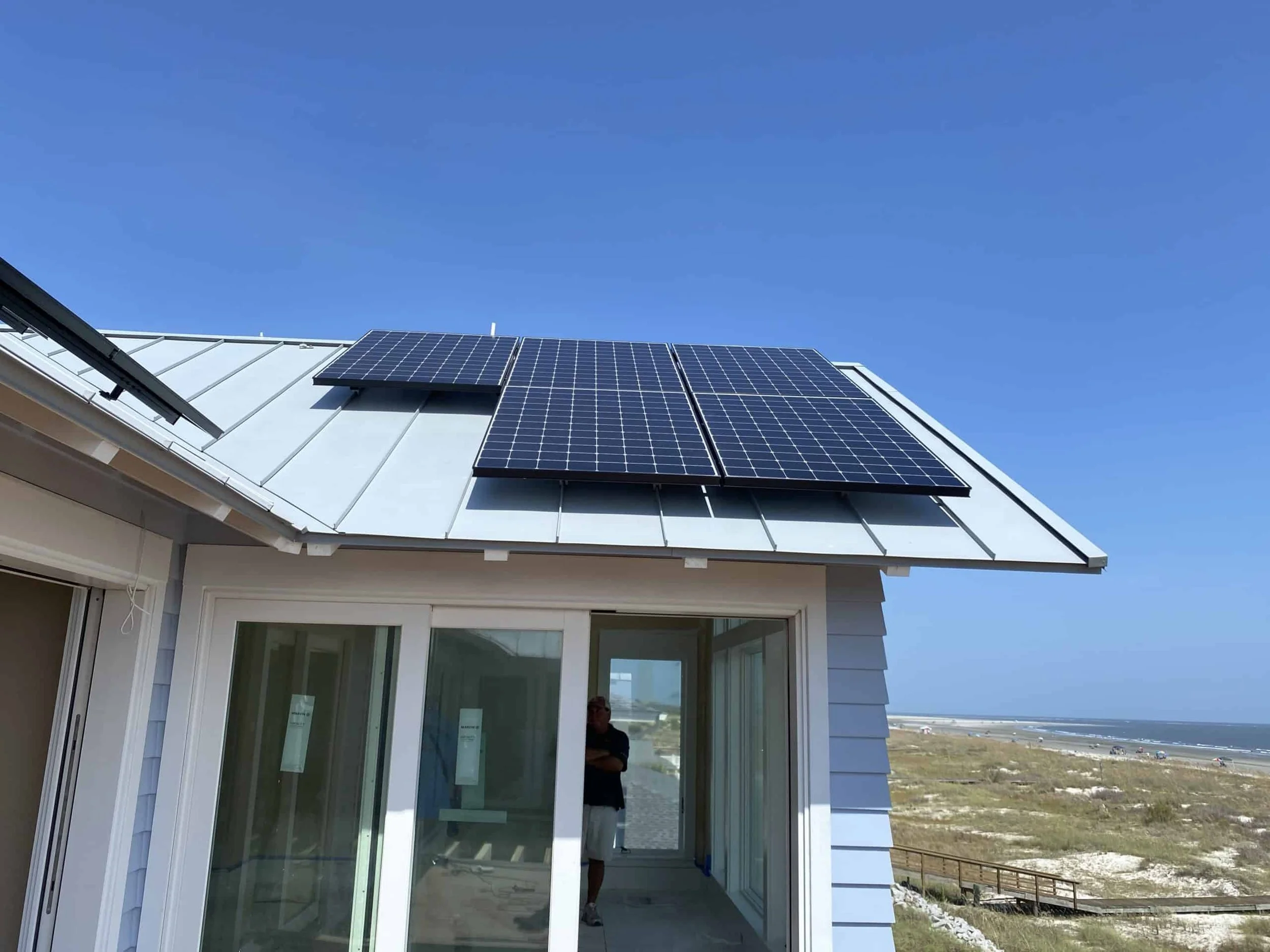
The conversation around rooftop solar has shifted. Without federal tax credits sweetening the deal, homeowners are asking a more fundamental question: why go solar? For us in coastal South Carolina, the answer has always been bigger than a tax break, it's about taking control of your own energy future.
The South Carolina Energy Freedom Act, enacted in 2019, lives up to its name. By lifting previous caps on net metering and solar leasing, the legislation opened the door for homeowners to become genuine energy producers. Solar installations in Beaufort County have increased 99% since 2019 and that momentum didn't come from federal incentives alone. It came from people who wanted out from under the unpredictability of the grid.
A Real-World Example: Cane Island House
Our Cane Island House is a working model of what true energy independence looks like. The home pairs an 11.9kW rooftop solar array with a Tesla Powerwall battery system and a super-efficient geothermal heat pump for both ambient heat and hot water. Layered on top of that: a tight building envelope, low solar heat gain coefficient windows, and occupancy-sensor-activated energy recovery ventilators. Together, these systems don't just reduce a utility bill, they fundamentally change the homeowner's relationship with energy.

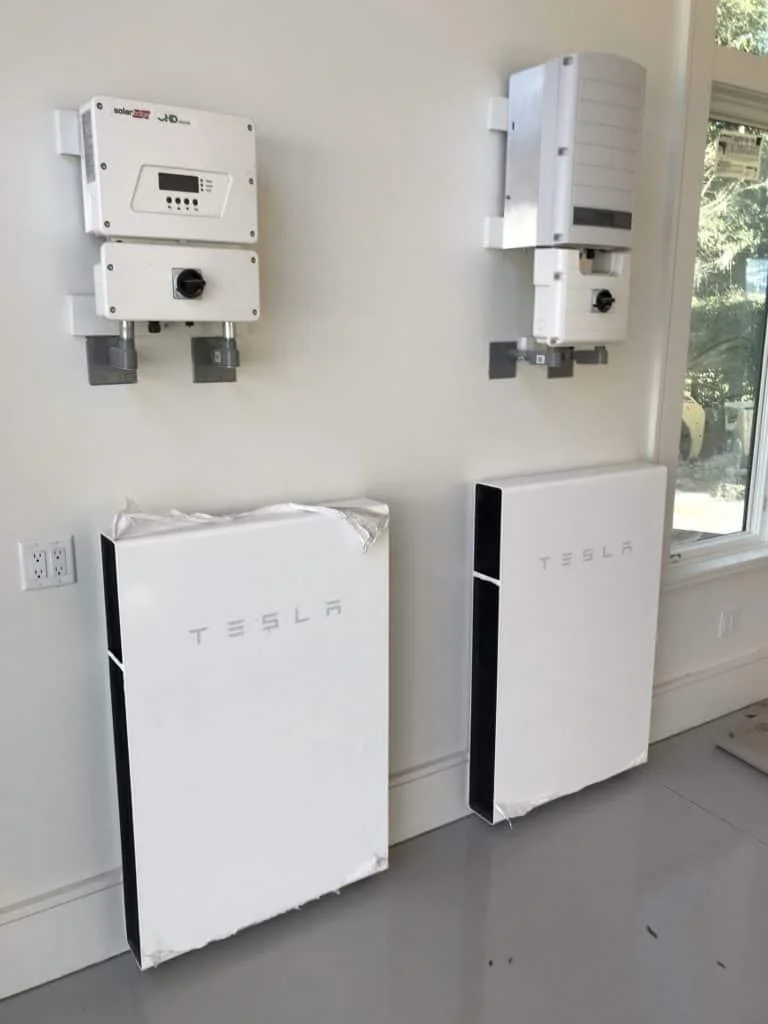
Two Tesla Powerwall2 batteries at a recent project
What is net-metering?
Net metering allows a solar-equipped home to sell surplus energy back to the utility company, drawing from the grid only when the panels aren't producing, like after dark. South Carolina law requires utilities to purchase that excess power at the same rate they charge consumers, meaning your roof can genuinely work for you.
But net metering has a catch: it only works when the grid does. In a region that sees its share of hurricanes and extended outages, depending entirely on the grid — even with solar, leaves you exposed.
The Real Independence Play: Battery Storage
This is where battery storage changes everything. A Powerwall connected to your solar array stores the energy your panels generate during the day, giving you a reserve to draw from when the sun goes down or the grid goes out. For homeowners in hurricane country, this isn't a luxury, it's a strategy.
The days immediately following a major storm are often the sunniest of the season, while utility restoration can take days or even weeks. A home with a solar array and battery backup isn't waiting around. It's powered up while the neighbors are not.
We've worked with a growing number of clients who've prioritized battery-connected solar specifically for this resilience. The technology is advancing rapidly, and while a single battery may not power an entire home indefinitely, it can keep essential systems, lights, refrigeration, medical equipment, and communications running when it counts most.
The Bottom Line
The absence of federal tax credits doesn't change the underlying logic of rooftop solar in South Carolina; it clarifies it. The strongest argument for solar was never a short-term financial incentive. It was always about long-term independence: from rising utility rates, from storm-related outages, and from the uncertainty of energy markets you can't control.
If you're designing or renovating a home in the Lowcountry, solar isn't an add-on. It's part of the architecture.