
How to Choose the Right Architect for Your Lowcountry Home
Start With the Work, Not the Website
Every architect has a website. Most of them look similar: beautiful photography, confident language, a list of services. What tells you far more than the website is the body of work itself and not just the highlight reel.
Ask to see projects that are similar to yours in location, scale, and complexity. If you are planning a waterfront home in the Lowcountry, look for an architect who has built many of them, not just one. If you want a renovation of a historic property, look for evidence that the firm understands historic preservation, not just renovation in general.

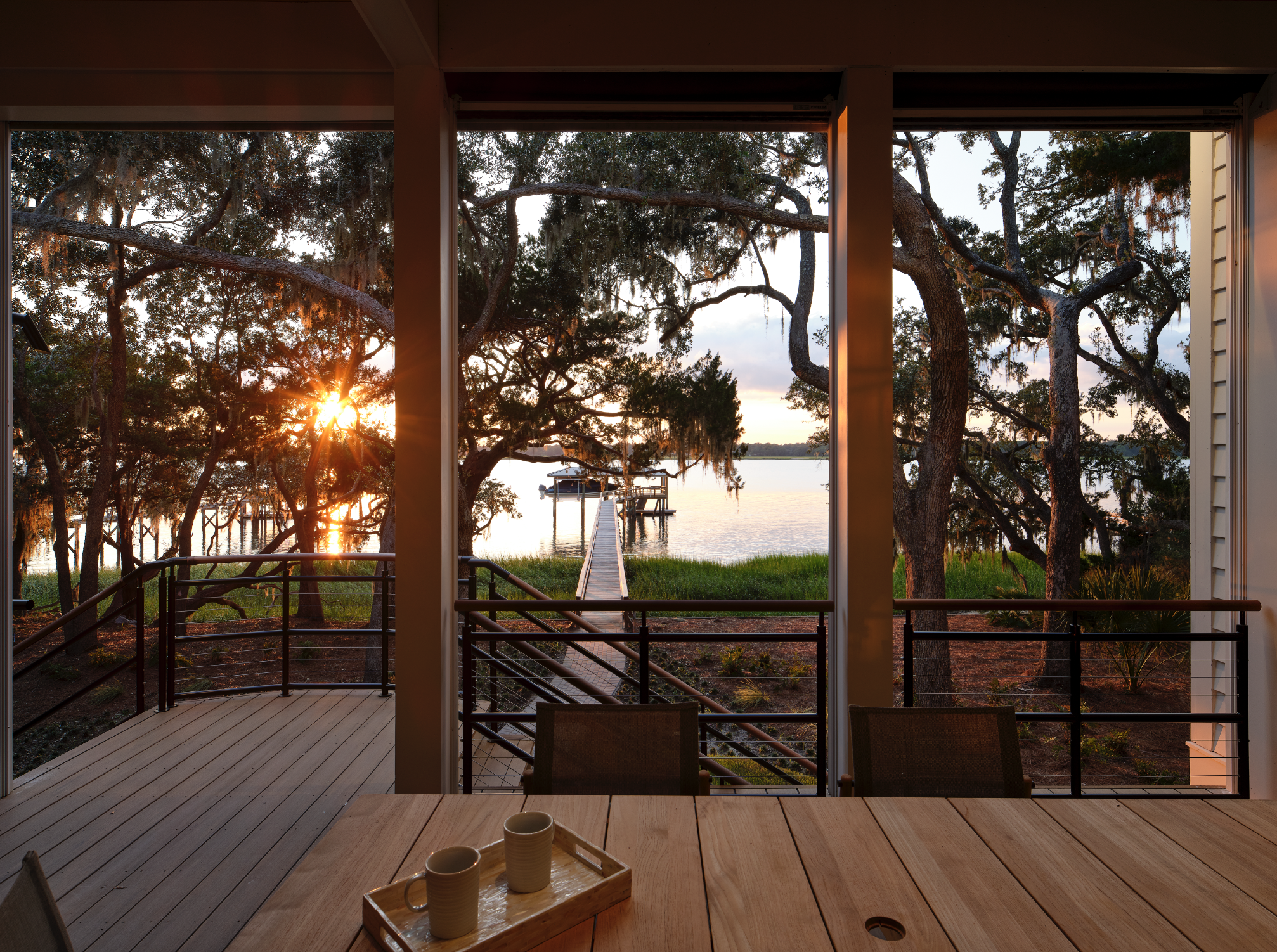
Pay attention to whether the work looks like it belongs where it is built. A home in coastal South Carolina should respond to the climate, the light, the landscape, and the architectural traditions of the region. If the portfolio could have been built anywhere, that is worth noting.
Climate Expertise Is Not Optional
The South Carolina Lowcountry is a specific and demanding place to build. The heat, the humidity, the salt air, the hurricane exposure, the flood regulations, and the sensitive coastal ecosystem all require knowledge that goes well beyond general residential architecture.
A home designed without that knowledge will cost more to cool, be more vulnerable to moisture damage, carry higher flood insurance premiums, and may not survive a serious storm as well as it should. None of that is recoverable with better furniture.
When you interview an architect, ask directly: How do you approach building envelope design in a hot, humid climate? What is your experience with FEMA flood zone requirements? Have you worked in the specific community where I want to build? The answers will tell you quickly whether you are talking to someone who has done this many times or someone who is learning on your project.

Credentials Matter, But Not All Credentials Are Equal
Licensure is the baseline. Every architect practicing in South Carolina must be licensed by the South Carolina Board of Architectural Examiners. That is the floor, not the ceiling.
Beyond licensure, look for credentials that signal depth of expertise relevant to your project. AIA membership indicates a commitment to professional standards and ongoing education. Recognition from peers, through AIA design awards, signals that the work has been evaluated by other architects, not just appreciated by clients. Recognition in publications like Southern Living, Garden & Gun, or Architectural Digest indicates that design editors, who review hundreds of projects, found the work exceptional. Forbes Best-in-State recognition means the firm was evaluated against thousands of practices nationwide on criteria including siting, climate responsiveness, craftsmanship, and regional integrity.
These things matter not because they are impressive on paper, but because they are independent confirmation that the work holds up under scrutiny
Ask How They Handle Construction
Many homeowners assume that once the drawings are done, the architect's job is finished. This is one of the most common and costly misconceptions in residential construction.
The gap between what is on paper and what gets built is where most problems occur. Materials get substituted. Details get simplified. Field conditions change. A contractor makes a judgment call that seems reasonable in the moment but creates a problem two years later.
An architect who stays involved through construction, reviewing submittals, visiting the site regularly, certifying payments, answering contractor questions, and catching errors before they are buried in walls, protects your investment in a way that no amount of careful drawing can on its own.
Ask any architect you are considering: What does your construction administration look like? How often are you on site? What happens when something is not built as designed? For clients building from out of state, this question is especially important. You cannot be there every week. Your architect can be.
Consider the Working Relationship
You are going to be working closely with this person for a year or more. The drawings matter. The expertise matters. So does whether you can communicate clearly, whether you trust their judgment when you disagree, and whether they listen as well as they advise.
A good architect brings strong opinions, because that is part of what you are paying for. But a good architect also knows that your home has to work for your life, not validate their design preferences. The best projects we have done are collaborations. The client brings the life they want to live. We bring the knowledge of how to build it in this place.
In your initial conversations, pay attention to how the architect asks questions. Do they want to understand how you actually live, where you have your morning coffee, how you entertain, what parts of your current home you wish were different, or do they move quickly toward solutions? The quality of the questions tells you a great deal about the design you will eventually get.
What to Ask When You Interview an Architect
The right questions separate firms with genuine regional expertise from those who will learn the Lowcountry on your project. Here are the ones worth asking and what you should be listening for.
How many homes have you designed in this specific area, and can I visit one or speak with that client? A confident answer here signals experience. Hedging signals the opposite.
How do you approach building for the Lowcountry climate specifically? You want to hear concrete answers about building envelopes, moisture management, and storm resilience, not generalities about "designing for place."
What is your process for managing projects for out-of-state clients? Communication cadence, site visit frequency, and how decisions get made when you are not present all matter enormously.
How involved are you during construction, and what does that look like in practice? The answer should go well beyond "we're available if there are questions."
What happens if the project goes over budget during design, how do you handle that? Budget management is a design skill. A good architect has a clear process for this.
Who specifically will be working on my project, and how accessible are they? At smaller firms this is straightforward. At larger ones, it is essential to know whether you are buying the principal's attention or a junior staff member's.
Can you walk me through a project from first meeting to move-in day? The answer should be specific, confident, and reveal how the firm actually works, not how they wish they worked.
One Final Thought
The best time to hire an architect is before you buy the land. A good architect can tell you whether a lot you are considering can actually be built on the way you intend, what it will cost, and whether the site has constraints that are not visible to the untrained eye. That conversation, which costs very little, can save an enormous amount of money, time, and heartbreak.
If you are thinking about building a custom home in Beaufort, Bluffton, Hilton Head, or anywhere in the South Carolina Lowcountry, we are happy to have that conversation. It is what we have been doing here for more than 35 years.